Wednesday, May 15, 2013

The Clockwork Three


The Clockwork Three by Matthew J. Kirby

What a fantastic book! The story takes place in the 19th century in a large, gritty city, similar to New York. The three main characters, teens Hannah, Frederick, and Giuseppe, come from different backgrounds and each have a fascinating story to tell. Their various circumstances paint a true-to-life picture of the place and time.

The characters eventually meet and realize that they each desperately need something and can help each other. Their adventure together provides a fast-paced story that includes a green violin, an amazing automaton, and a mysterious treasure.

I like Giuseppe’s story best, and was interested to read that the author based his character off a true story of an Italian boy he read about in an 1873 newspaper. The “About the Author” page reads:

“Joseph had been taken from his home in Italy and brought to New York City as a slave to play music on the streets for money. One night, he escaped from his captor and fled to Central Park, where a kind old woman took care of him. Eventually Joseph’s story became well-known, and he went to court to testify against his padrone, which led to changes in the law to protect other boys like him. Joseph’s bravery and strength are what inspired Matthew to write The Clockwork Three, his first novel.”

Life for children was certainly different then. Many kids were exploited, treated harshly, and forced to grow up quickly. The laws did little to help and protect them. I like the historical context of this book because it teaches today’s kids how fortunate they are. My daughter flew through this book, and I was only halfway through when my teen son swiped it from me. But of course I'd fly to the moon to get him to read, so I willingly gave it up.

This novel is great for kids ages 10 or 11 to adult. I hope Kirby continues to deliver such wonderful stories!

Oops, it looks like he does have some other books out -- they should be fun to check out!

Monday, March 4, 2013

The Picture of Dorian Gray

The Picture of Dorian Gray by Oscar Wilde

Well, life intervened and I have neglected my little blog. We moved from Utah to gorgeous Northern California last month and have experienced all the challenges that accompany a big move with four kids. Intense schools and loads of paperwork and homework, flu and poison oak, and quirks in our new older home. But it's soo pretty! Trees, hills, trees, and hills.

A new friend, Melissa, loaned me The Picture of Dorian Gray. I knew little about Oscar Wilde, but the brief bio describes him as wild. This novel is supposedly somewhat autobiographical.

The book is very philosophical and a fascinating study of man's evil nature. When we first meet him, Dorian Gray is an untouched young man with a pure heart and movie-star handsome face.

He is a friend to Basil Hallward, a good-hearted painter who looks upon Dorian as his muse. Basil has just completed Dorian's portrait and it's a gorgeous replication of this stunning young man. That same day at Basil's home, Dorian makes the acquaintance of the worldly Lord Henry Wotton, much to Basil's chagrin. Lord Henry is a smooth, cynical gentleman who is without morals and stands for nothing. Dorian is intrigued by his light-hearted persona and smooth, philosophical words, and increasingly falls under his influence.

For example, as Lord Henry admires Dorian's portrait he comments on the boy's beauty but reflects that it will be fleeting; we all age and lose our youth, eventually becoming grotesque in our looks. His words startle young Dorian, who for the first time has recognized his beauty in the portrait, and he panics. He cries out a fervent wish that the portrait would age instead. In this moment, he sells his soul for eternal youth.

Under Lord Henry's worldly guidance and his own vanity, Dorian's life changes its course. He becomes increasingly wicked but always rationalizes his deeds. He hurts others to satisfy his insatiable appetites and buries himself in material possessions.

I love the trio of the three main characters and what they represent: Dorian ("natural man" with a tendency to do evil), Basil Hallward (the "creator" of his portrait and the role of his conscience), and Lord Henry Wotton (the subtle, cynical devil who lures him into temptation). And yet ultimately, Dorian makes his own decisions and must account for them. What a chilling and fascinating book!

Thursday, January 17, 2013

Reached


Reached by Ally Condie

Ugh. I finally “reached” the end! I really tried to like Reached, but it was laborious, like wading through a thick marsh. I’ve read and reviewed Matched and Crossed, the first novels in this trilogy; I liked them. But in this round Cassia, the smart heroine I used to admire, spent almost the whole 512 pages in a poetry-inflicted haze.

Plot: aah, I can’t. Okay, I'll try. The Rising (rebellion against the Society, or government) has taken hold. Cassia, Ky, and Xander join the Rising, helping to combat the Society’s plague. But soon a mutated form of the plague develops, and the three characters must help the Pilot (leader of the Rising) find a cure. That’s the gist, I think. And Xander loves Cassia and Cassia loves Ky.

Thursday, December 13, 2012

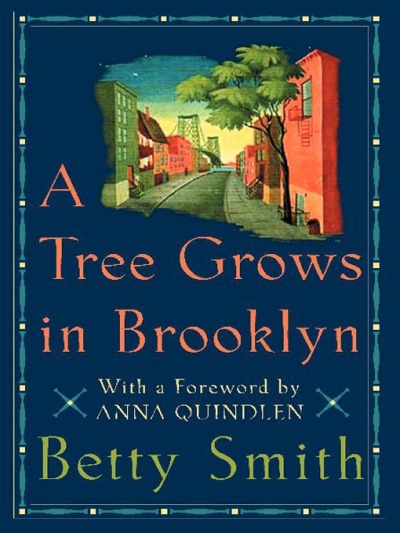
A Tree Grows in Brooklyn


A Tree Grows in Brooklyn by Betty Smith

I read this novel years ago in college and forgot about it until recently. Someone mentioned it to me and I decided to dig it out of the stacks of books on our living room floor. It’s funny, sad in bits, sometimes gritty, and incredibly honest and realistic. I love it.

A Tree Grows in Brooklyn was written in 1943 and take place in Brooklyn, NY during the early 1900s. Francie Nolan is a lonely young girl – poor, bright, and keenly aware of her surroundings. She feels dark and drab next to her golden, handsome younger brother Neeley, who takes after their father, Johnny Nolan. Johnny is a dreamer – a musician and alcoholic with a loving heart; he is Francie’s only real source of affection. The pretty mother, Katie, is practical by necessity and a bit sharp with Francie. She cleans houses to put food on the table and pay the rent, but it’s never enough.

The story flows beautifully as it meanders through Francie’s early life, sharing anecdotes of her childhood. Katie’s two sisters (also strong, pretty women married to weak men) play a large role in Francie’s upbringing and provide a support system for Katie and lots of comic relief for the reader.

There are two parts in the book that especially struck me. Eighteen-year-old uneducated Katie has just given birth to Francie, and is feeling dismayed at the realization that Johnny will not be dependable. She, Katie, will have to find a way to support her family and she is complaining to her mother about her bleak, physically challenging life ahead. She asks her mother how she can create a better world for her new daughter.

This old woman, an uneducated Austrian immigrant, teaches Katie that the key lies in reading and writing. She counsels Katie to read to her children each day a page from Shakespeare and a page from the Bible. (She herself can’t read.) She further advises Katie to teach her daughter about Santa Claus and fairies. Katie thinks this sounds ridiculous: “Why? When I, myself, do not believe?”

Because . . . the child must have a valuable thing which is called imagination. The child must have a secret world in which live things that never were. It is necessary that she believe. She must start out by believing in things not of this world. Then when the world becomes too ugly for living in, the child can reach back and live in her imagination . . . .

The child will grow up and find out things for herself. She will know that I lied. She will be disappointed.

That is what is called learning the truth. It is a good thing to learn the truth one’s self. To first believe with all your heart, and then not to believe, is good too. It fattens the emotions and makes them to stretch. When as a woman life and people disappoint her, she will have had practice in disappointment and it will not come so hard. In teaching your child, do not forget that suffering is good too. It makes a person rich in character.

I love that lesson on the importance of sharing stories and legends, and what a difference reading makes.

My other favorite part takes place right after Francie’s birth. Katie is sitting out on the front stoop with her sickly infant as neighbors walk by. They comment on Francie’s poor health and say it’d be better for all if she weren’t to survive.

Don’t say that, Katie held her baby tightly. It’s not better to die. Who wants to die? Everything struggles to live. Look at that tree growing up there out of that grating. It gets no sun, and water only when it rains. It’s growing out of sour earth. And it’s strong because its hard struggle to live is making it strong. My children will be strong that way.

There is much wisdom in this exceptional book. Not to give anything away, but Francie does rise above her surroundings and grows into a remarkable young woman. I like her character best.

Wednesday, November 21, 2012

Palace of Stone

Palace of Stone by Shannon Hale
When Miri and five other graduates of the princess academy are invited to the capital to help the princess prepare for her wedding, Miri's thoughts are conflicted.

To finally see and live in Asland and attend the university there seem like a dream come true for Miri. What a privilege to live in the castle with princess-to-be Britta, her best friend. And Peder, Miri’s “almost” betrothed, is to accompany the group for his apprenticeship to an artisan.

But Miri’s beloved home, Mount Eskel, is never far from her thoughts as she embarks on this new adventure. The grand city of Asland fascinates and terrifies her, but she soon acclimates and immerses herself in her studies.

Whispers of a revolution against the king and his court (including the unpopular but misunderstood Britta) intensify, and Miri becomes secretly embroiled in the conflict. The “shoeless” (poor and hungry) of the kingdom plan to murder their indifferent leaders and establish a new government. Miri’s heart is torn between the mistreated citizens and her role as a lady-in-waiting of the court.

I thought this sequel to Princess Academy was really terrific. Many important themes are addressed—loyalty to friends, romantic love, hunger and poverty, education and keeping records, revolution for change, and home and family.


Hale’s writing is as beautiful as ever; I especially enjoyed the lines of poetry that open each chapter. Abby was dying to meet her and in September we were able to get to Barnes & Noble for her book signing, which included a Q & A and was really interesting!

Tuesday, November 20, 2012

Princess Academy

Princess Academy by Shannon Hale

I had to reread Princess Academy before getting to Palace of Stone, its recently released sequel. Princess Academy is Shannon Hale’s 2005 Newbery Honor novel.

I’ve always thought Hale’s writing has a unique, lyrical quality that’s so beautiful. It’s almost like reading poetry.

Miri lives with her pa and older sister on remote Mount Eskel in the outer regions of Danland. The villagers’ lives revolve around their work in the quarry, mining a beautiful white stone called linder.

When an announcement arrives that the prince of Danland is to choose his bride from among Mount Eskel’s rough village girls, an academy is established to train and educate the girls. Finally, Miri’s eyes are opened to reading and books, the kingdom below Mount Eskel, and her potential to make something of her life.

When danger strikes the academy, it is Miri’s courage and wit that save the girls from a terrible enemy.

Princess Academy isn’t about fluffy pink dresses and magic wands. The stony mountain setting and harsh realities of poverty and quarry life don’t translate to a Disney-type princess story. The girls are mostly plain Janes, and the prince is a socially awkward teenage boy, which make the story all the more relatable.

Still, the setting feels far away and long ago, and the writing is lovely. Girls 10 to 100 will adore it.

Wednesday, October 24, 2012

Janitors 2 and Persuasion


I wrote a review of Janitors 2 for the Deseret News .  .  . here’s the link. Fun, fun!

http://www.deseretnews.com/article/865564355/Whitesides-weaves-magic-in-second-book-of-Janitors-series.html


I also recently reread Jane Austen’s Persuasion. I’m not going to attempt a critique of a Jane Austen novel, but I’ll share a little synopsis. It’s an entertaining read!

Anne Elliot is a sweet, well-mannered young woman burdened with a vain, foolish father (I love this description: “Vanity was the beginning and the end of Sir Walter Elliot’s character”) and two deplorable sisters. (Deplorable is an Austen-y word.) I have to smile that at “seven and twenty” Anne has lost her “bloom” (good looks) . . . makes me feel pretty haggard and I am not yet one and forty. (I love the quaint, early 19th century language.) (Sorry for all the parentheses.)

Eight years previous, Anne “formed an attachment” with the dashing Frederick Wentworth, a young man without name or fortune. They would have married, but young Anne was advised to end the attachment. Well, as you can guess, they meet again but under very different circumstances. Captain Wentworth has made his fortune and can now hold his own in Anne’s social circle.

Gentle, modest Anne still loves Captain Wentworth, but because she spurned him he believes she isn’t interested. He is now a worthy catch for Anne's unmarried sister and sisters-in-law. The attention he pays to the other young ladies is painful for Anne, and she doubts she will ever win him back.

Mr. Elliot (a cousin with suspicious motives), Mrs. Clay (an intruder into the family circle with a protruding tooth), and Lady Russell (Anne’s friend) round out the cast of leading characters.

Anne’s father and complaining sisters are priceless.

Love Jane Austen. Sigh.